✨ New Arrivals Just Dropped!Explore
1 / 4
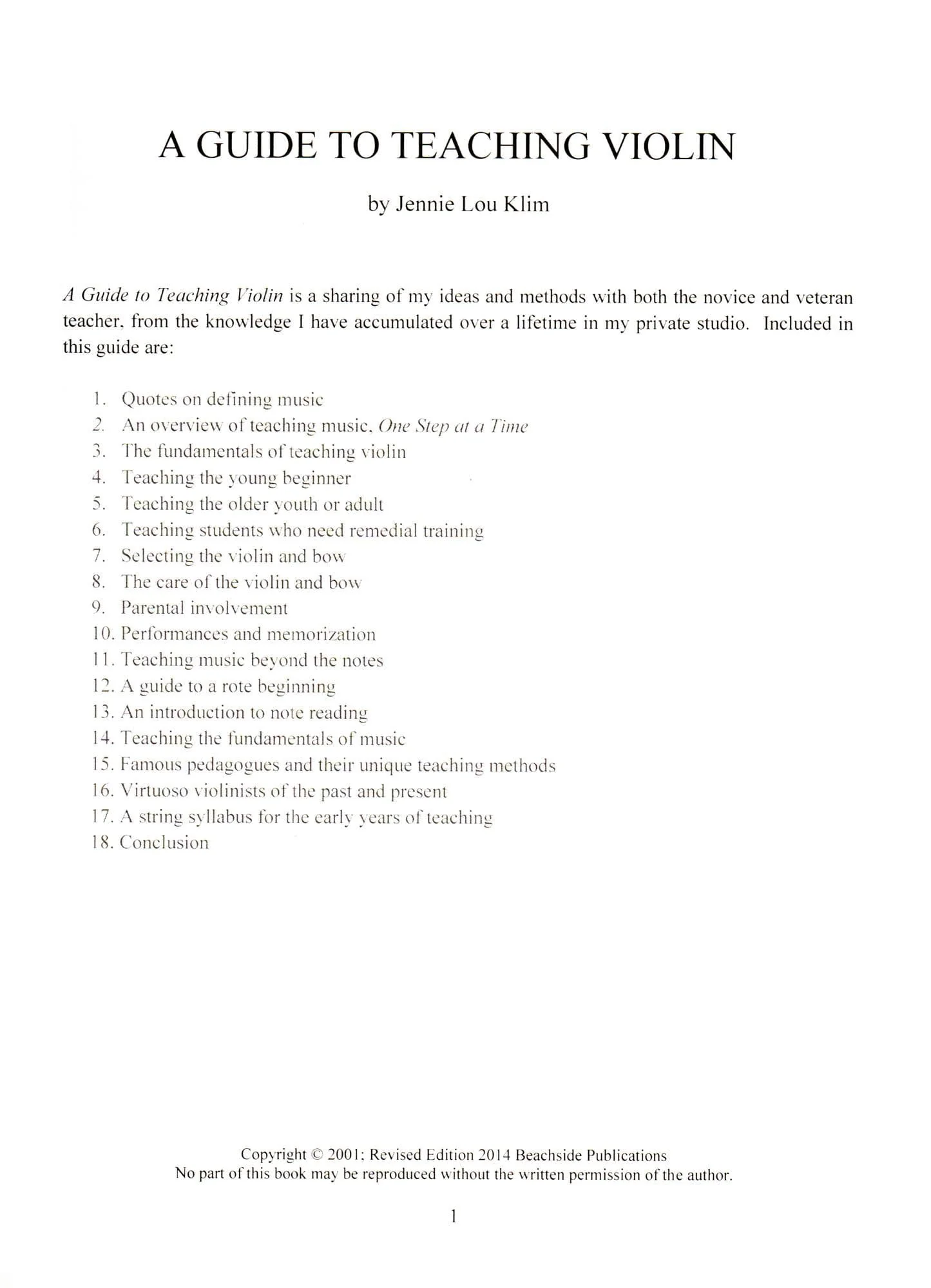
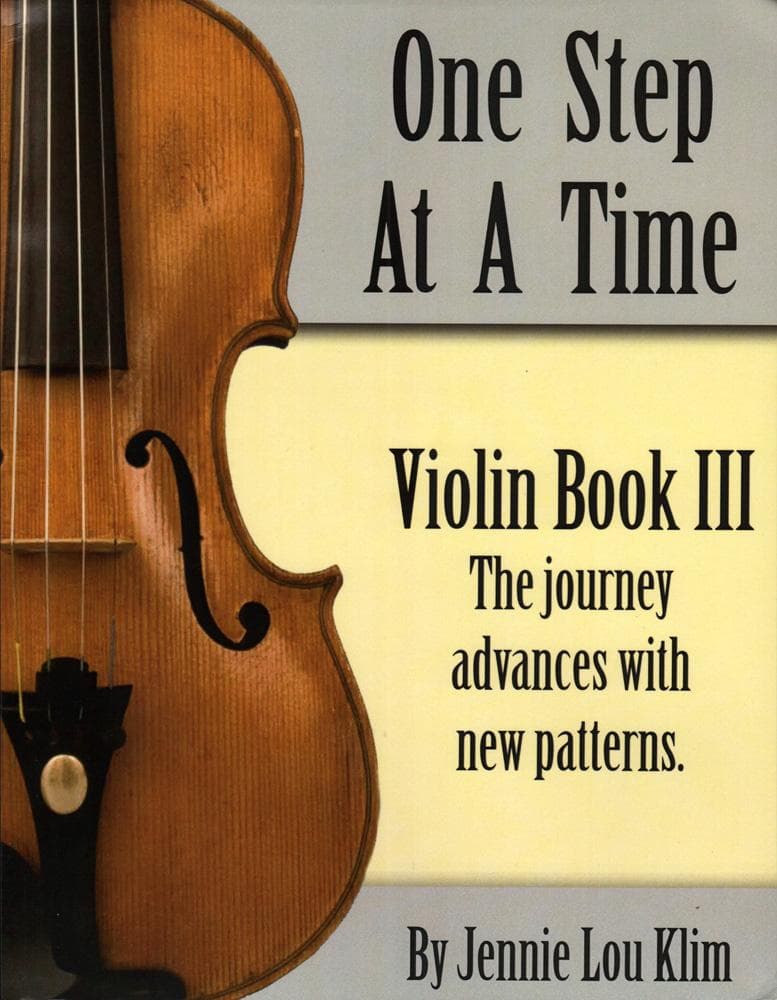
One Step at a Time - Book 3 - Violin - Jennie Lou Klim - Beachside Publications
One Step at a Time: A Classic Approach to Teaching Strings is a series of new method books for teaching violin, viola, cello, and bass, in the private music studio. The fundamentals of playing stringed instruments are introduced on uncluttered pages, with an emphasis on finger patterns. These books are designed for the young child just learning to play an instrument, but are also effective for students of all ages.
Philosophy:
During 50 years of teaching violin in my private studio, I discovered that when a student is introduced to more than one concept at a time, it becomes confusing. If reading notes is combined with letter names or counting with numbers, it becomes overwhelming. My students taught me these valuable lessons. Learning music is exactly the same as learning a language. The child learns to speak sounds, then words, then sentences. Much later, the child learns to spell the words and learn the grammar. In like manner, the student must learn to create a tone, then recognize that tone on the paper, and gradually put many tones together. It is not until the playing becomes fluent that elementary theory is introduced. ONE STEP AT A TIME developed gradually over many years, and has been fine-tuned with students in my studio, and in studios across the country.
I believe that every beginning student must master basic concepts, and these concepts must be introduced, one at a time in the following order, with an ever-present emphasis of the best tone possible:
- To hold the instrument and bow correctly and with ease
- To develop pitch or hear the relationship of one note to another
- To use all four fingers in the Basic Pattern, thus introducing the first half of a major scale
- To recognize every note on the staff as a specific finger placement, without any annotated fingering
- To learn the rhythm relationship of half, quarter, and eighth notes within each measure, without numbers
- To play a slur of two or more notes
- To understand the concept of a key as a family of notes within a scale
- To learn the letter names for each note
- To count the rhythm, using numbers
Overview
In BOOKS III and IV, more complex rhythmic and bowing patterns are introduced in other keys, necessitating the introduction of three more finger patterns. There are songs and etudes within the one-octave range before progressing to two-octave scales, etudes and songs, requiring combination patterns. Finger Pattern Charts appear on appropriate pages as guides.
Philosophy:
During 50 years of teaching violin in my private studio, I discovered that when a student is introduced to more than one concept at a time, it becomes confusing. If reading notes is combined with letter names or counting with numbers, it becomes overwhelming. My students taught me these valuable lessons. Learning music is exactly the same as learning a language. The child learns to speak sounds, then words, then sentences. Much later, the child learns to spell the words and learn the grammar. In like manner, the student must learn to create a tone, then recognize that tone on the paper, and gradually put many tones together. It is not until the playing becomes fluent that elementary theory is introduced. ONE STEP AT A TIME developed gradually over many years, and has been fine-tuned with students in my studio, and in studios across the country.
I believe that every beginning student must master basic concepts, and these concepts must be introduced, one at a time in the following order, with an ever-present emphasis of the best tone possible:
- To hold the instrument and bow correctly and with ease
- To develop pitch or hear the relationship of one note to another
- To use all four fingers in the Basic Pattern, thus introducing the first half of a major scale
- To recognize every note on the staff as a specific finger placement, without any annotated fingering
- To learn the rhythm relationship of half, quarter, and eighth notes within each measure, without numbers
- To play a slur of two or more notes
- To understand the concept of a key as a family of notes within a scale
- To learn the letter names for each note
- To count the rhythm, using numbers
Overview
In BOOKS III and IV, more complex rhythmic and bowing patterns are introduced in other keys, necessitating the introduction of three more finger patterns. There are songs and etudes within the one-octave range before progressing to two-octave scales, etudes and songs, requiring combination patterns. Finger Pattern Charts appear on appropriate pages as guides.
$10.49
One Step at a Time - Book 3 - Violin - Jennie Lou Klim - Beachside Publications—
$10.49
Product Information
Product Information
Shipping & Returns
Shipping & Returns
Description
One Step at a Time: A Classic Approach to Teaching Strings is a series of new method books for teaching violin, viola, cello, and bass, in the private music studio. The fundamentals of playing stringed instruments are introduced on uncluttered pages, with an emphasis on finger patterns. These books are designed for the young child just learning to play an instrument, but are also effective for students of all ages.
Philosophy:
During 50 years of teaching violin in my private studio, I discovered that when a student is introduced to more than one concept at a time, it becomes confusing. If reading notes is combined with letter names or counting with numbers, it becomes overwhelming. My students taught me these valuable lessons. Learning music is exactly the same as learning a language. The child learns to speak sounds, then words, then sentences. Much later, the child learns to spell the words and learn the grammar. In like manner, the student must learn to create a tone, then recognize that tone on the paper, and gradually put many tones together. It is not until the playing becomes fluent that elementary theory is introduced. ONE STEP AT A TIME developed gradually over many years, and has been fine-tuned with students in my studio, and in studios across the country.
I believe that every beginning student must master basic concepts, and these concepts must be introduced, one at a time in the following order, with an ever-present emphasis of the best tone possible:
- To hold the instrument and bow correctly and with ease
- To develop pitch or hear the relationship of one note to another
- To use all four fingers in the Basic Pattern, thus introducing the first half of a major scale
- To recognize every note on the staff as a specific finger placement, without any annotated fingering
- To learn the rhythm relationship of half, quarter, and eighth notes within each measure, without numbers
- To play a slur of two or more notes
- To understand the concept of a key as a family of notes within a scale
- To learn the letter names for each note
- To count the rhythm, using numbers
Overview
In BOOKS III and IV, more complex rhythmic and bowing patterns are introduced in other keys, necessitating the introduction of three more finger patterns. There are songs and etudes within the one-octave range before progressing to two-octave scales, etudes and songs, requiring combination patterns. Finger Pattern Charts appear on appropriate pages as guides.
Philosophy:
During 50 years of teaching violin in my private studio, I discovered that when a student is introduced to more than one concept at a time, it becomes confusing. If reading notes is combined with letter names or counting with numbers, it becomes overwhelming. My students taught me these valuable lessons. Learning music is exactly the same as learning a language. The child learns to speak sounds, then words, then sentences. Much later, the child learns to spell the words and learn the grammar. In like manner, the student must learn to create a tone, then recognize that tone on the paper, and gradually put many tones together. It is not until the playing becomes fluent that elementary theory is introduced. ONE STEP AT A TIME developed gradually over many years, and has been fine-tuned with students in my studio, and in studios across the country.
I believe that every beginning student must master basic concepts, and these concepts must be introduced, one at a time in the following order, with an ever-present emphasis of the best tone possible:
- To hold the instrument and bow correctly and with ease
- To develop pitch or hear the relationship of one note to another
- To use all four fingers in the Basic Pattern, thus introducing the first half of a major scale
- To recognize every note on the staff as a specific finger placement, without any annotated fingering
- To learn the rhythm relationship of half, quarter, and eighth notes within each measure, without numbers
- To play a slur of two or more notes
- To understand the concept of a key as a family of notes within a scale
- To learn the letter names for each note
- To count the rhythm, using numbers
Overview
In BOOKS III and IV, more complex rhythmic and bowing patterns are introduced in other keys, necessitating the introduction of three more finger patterns. There are songs and etudes within the one-octave range before progressing to two-octave scales, etudes and songs, requiring combination patterns. Finger Pattern Charts appear on appropriate pages as guides.